Potential of Biogas as an alternative to LPG
Circular economy
Sustainable lifestyle
- by Suvarna Mishra, Knowledge Development Associate, Saahas
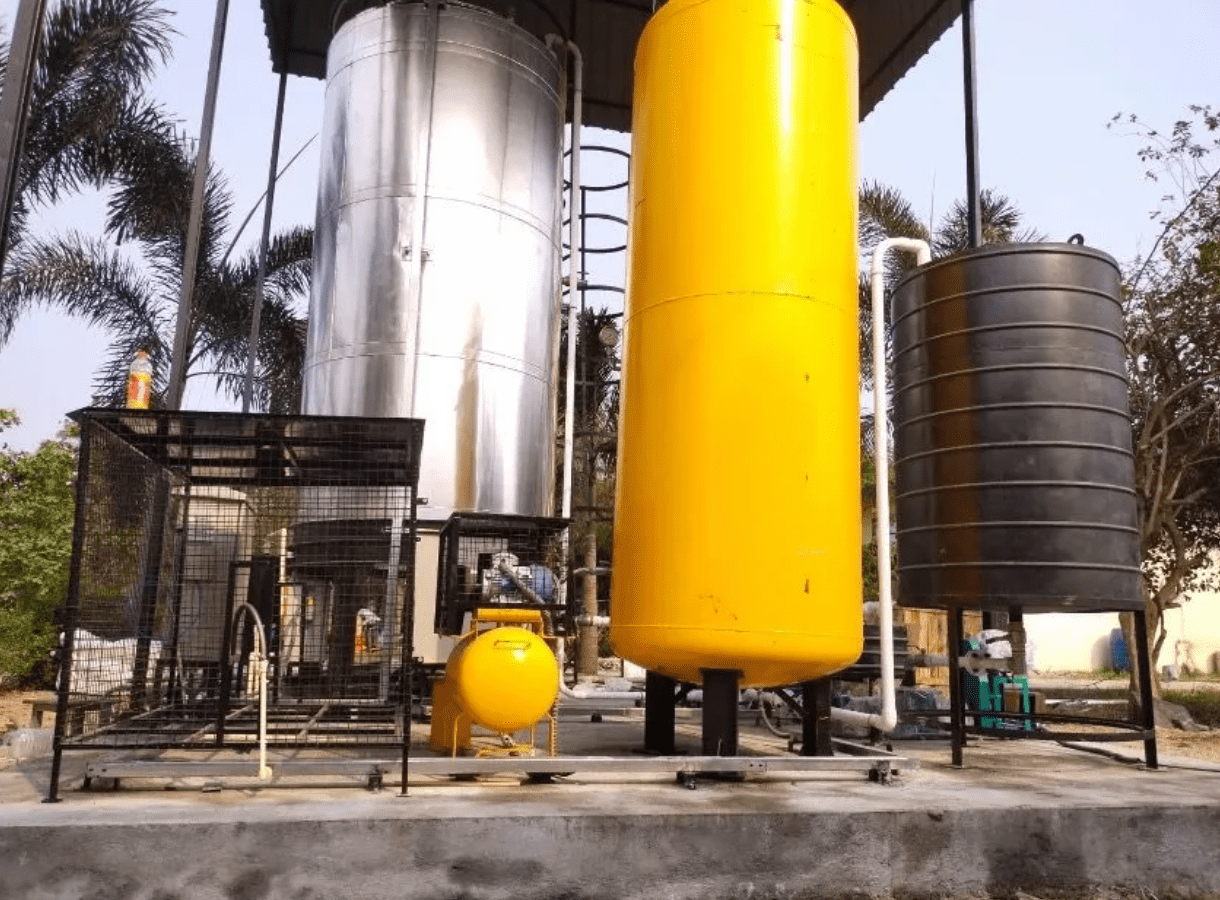
The recent geopolitical situation in Western Asia has created a shortage of petroleum and petroleum products supply, including Liquefied Petroleum Gas (LPG). LPG is widely used for cooking across India, and many households rely on it for their primary cooking. With about 60% of the supply dependent on imports, the sudden disruption has a direct ripple effect on the everyday life of the common man.
Families are struggling to make bookings; on the other hand, due to greater dependence on LPG, restaurants and food joints are finding it difficult to operate normally. Many are operating under limitations, while some have even been forced to temporarily shut down. Small food joints and local eateries have started putting up notices saying they will charge extra due to rising gas prices. The crisis has pushed people to use coal, cow dung cakes, and wood as alternatives, which will negatively impact the environment, worsen air quality, increase people’s vulnerability to health challenges, and increase carbon emissions. Hence, the common people bear the brunt of daily challenges, while world leaders choose to escalate global issues. It is the need of the hour to find a solution that is scalable and implementable to provide affordable and accessible energy security to the people across India, but how?
Amidst all the negative impacts of the crisis, there lies an opportunity for Biogas to shine as a potential alternative across the country. Rightly so, a buzz of discussions has started on platforms like LinkedIn. Biogas is not a new technology, but has been present in India since 1957 and has evolved significantly over time. Biogas is a decentralised system that produces biomethane through anaerobic digestion. It uses organic waste, especially kitchen waste, to generate usable energy. Biogas is a single solution for dual problems; while managing waste effectively, it also provides a local source of fuel. The Government of India launched the National Project on biogas development in 1981–1982 to popularise the use of family biogas systems. Close to 10 lakh households benefited from the program, making a shift towards clean fuel. The programme and biogas technology both evolved over time, benefiting many families and driving a broader shift to biogas-based cooking in many rural areas by the 1990s. Although many biogas systems failed due to infrastructure issues, we remain committed to developing more reliable and durable technologies. Saahas, a non-profit that works in solid waste management, has been actively advocating for biogas as a reliable alternative to LPG for cooking. Saahas, with the support of CSR partners, has set up and supported various biogas plants of different scales. These plants have helped several institutions and communities reduce their dependence on LPG while effectively managing their waste. Biogas is also a climate-friendly solution. It helps reduce carbon emissions by capturing methane from waste and converting it into energy instead of letting it escape into the atmosphere. Since it is a decentralised system, it also reduces emissions from transportation involved in LPG supply.
The Koramangla bio-methanation facility, which was set up four to five years ago, is one such successful model that supplies biogas to nearby kitchens, including six hotels, as well as the GAIL station. The facility has a capacity of 8 TPD (tonnes per day) and uses locally collected organic waste to produce fuel, which is then supplied to nearby kitchens. The current LPG crisis has led to high demand for BioFuels. Although current capacity is a limiting factor, the facility will soon expand to 13 TPD, enabling it to meet the increased demand.
Tracing back in history, the present geopolitical situation around petroleum is similar to the 1973 oil crisis during the Cold War. The oil crisis had exposed the vulnerability of countries that were dependent on external energy sources. The present situation also shows that such disruptions can recur. India stands on the brink of vulnerability, and there will be recurring consequences if we don’t take action to reduce our dependence on critical resources imported from other countries. For a developing nation already struggling with poverty, such events are detrimental to growth.
While the current supply gap is a concern, it is also an opportunity to shift towards decentralised, sustainable, and locally available energy solutions such as biogas. This shift towards biogas aligns with the “Make in India” initiative, launched to enable India to become a manufacturing hub and move towards self-reliance.
Although initial infrastructure investment can be demanding, it can address pressing issues in waste management and energy security. It will not just prove a wiser environmental choice, but also a necessary step towards building long-term energy security and making India self-reliant.
Circular economy
Resource recovery
Sustainable lifestyle
Waste segregation
- By Divya Tiwari, Advisor, Saahas
Policy
Resource recovery
Waste segregation
- By Anas Mohammed R, Project Manager, Saahas
Circular economy
Sustainable lifestyle
- By Pausali Pradhan, Knowledge Development Associate, Saahas