Supported By
Swachh Halar Khambhalia
Ongoing
Supported By
Strengthen GP-led solid waste systems to reduce landfilling and enable resource recovery.

Location
Khambhalia

Duration
December 2025 to ongoing

Focus Area
IEC, Capacity Building, Swachh Sarvekshan

Supported By
CSR Trust for SDGs in India

Coverage
7 wards

Target
14000 PoG

State
Gujarat

Key Stakeholders
Municipal officials, Donor (Nayara Energy)
Background/Need:
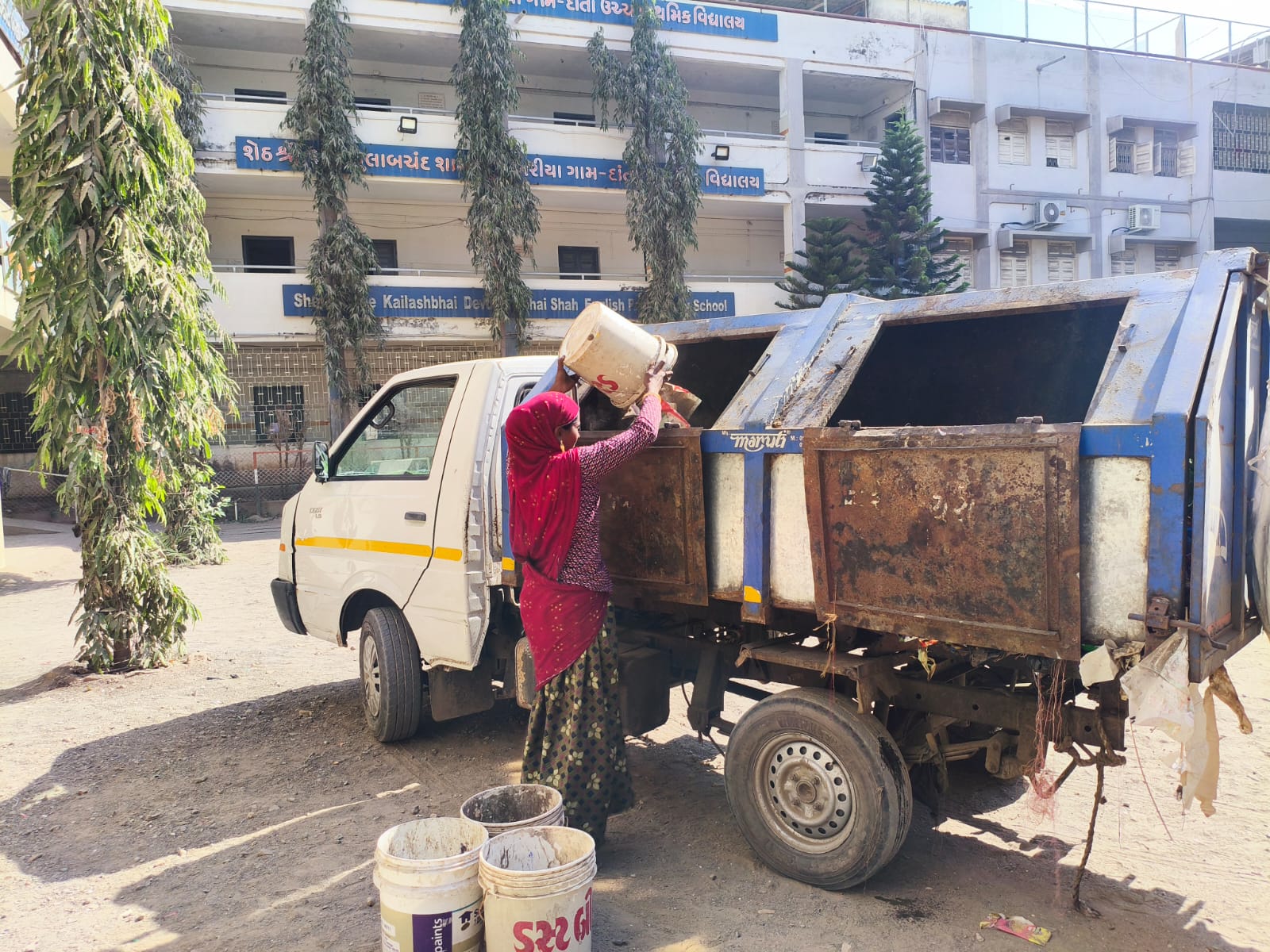
The need for the intervention arises from multiple systemic gaps identified through both secondary and Swachh Halar findings at Khambhalia. These gaps hinder the establishment of a sustainable, accountable, and inclusive SWM system.
Objectives:
- Conduct a rapid baseline assessment across all 7 wards to identify waste generation patterns, service gaps, stakeholder needs and use this to co-develop a ward-wise action plan with the ULB.
- Achieve 75% source segregation among all categories of waste generators (households, shops, institutions) by designing and implementing sustained, localised behaviour change and IEC campaigns.
- Strengthen the operational and supervisory capacity of KNP, sanitation workers and Safai Mitras through structured training, development of SOPs and regular joint learning and reflection sessions.
- Improve collection efficiency and traceability by supporting digital route mapping, GPS-based monitoring and ICCC dashboard integration for real-time performance tracking and accountability.
- Enable the inclusion and welfare of Safai Mitras and informal waste workers by supporting access to entitlements, improving working condition and formally recognising their roles.
- Ensure Khambhalia’s preparedness for Swachh Survekshan 2028 through systematic monitoring, documentation, citizen feedback, digital reporting, and post-project handover of tools and best practices