The Real Issue Isn’t Buying. It’s Mindless Buying.
Circular economy
Sustainable lifestyle
- by Anas Mohammed
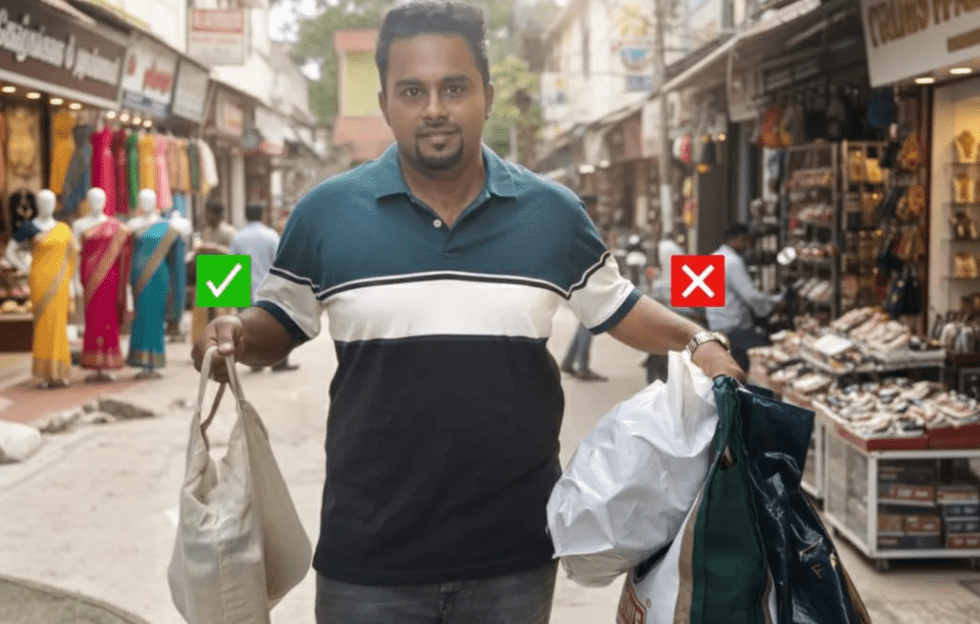
Recently, I had a conversation with my cousin about fast consumerism and how, in today’s world, people are buying more and more frequently beyond their needs. As an environmentalist, I have always advocated for minimalism, circular practices, and responsible consumption, such as choosing reusables over disposables, saying “No” to tissue paper, and avoiding unnecessary purchases that exploit resources. But my cousin shared another perspective on minimalistic buying. “You can’t expect everyone to live that way. For some, buying what they couldn’t afford before is progress, not excess.” And he’s right. People with limited or modest financial means buy to meet essential needs or to access opportunities that were previously out of reach. That isn’t the problem. I fully accept and respect this. This is what equity in sustainability really means — we can’t impose the same expectations on everyone. A person buying a car contributes far more to carbon emissions than someone buying a few basic clothes. Most such households make purchasing decisions based on necessity and affordability, not luxury. The real issue isn’t buying. It is mindless buying. For instance, getting 10 shirts just because there is a discount, not because you actually need them. I also understand that the system around us- the society, culture, business, and even policy- often promotes fast consumerism. Advertisements push us to buy more, trends change faster than logic, and convenience often wins over conscience. But as individuals, we still hold power. We can start where we are, with what we can afford, and make small shifts that fit our reality. Here’s the bigger picture I shared with him. For years, developed nations like the U.S. have been the biggest polluters. They exploited resources, grew wealthy, and now can afford to go green. Likewise, people with more financial comfort today have the privilege to choose minimal and sustainable ways of living. For eg., they can afford to organic food, buy 5 star rating electric appliances, buy branded items which can last longer etc. But everybody cannot do the same. However, there are small, sustainable choices anyone can adopt. Some of these choices include carrying your own bottles, bringing your own containers for parcels, and avoiding carry bags whenever possible. What we consider a need or a want is often shaped by practical realities such as budget, access, and daily requirements. For households with limited financial flexibility, a need is often something that makes everyday life functional — replacing a phone that no longer works, buying clothes for daily wear or work, or purchasing a two-wheeler to reduce travel time and physical strain. These choices are about practicality, helping people manage daily life more easily. A wealthier group can invest in higher-quality products that last longer, come with warranties, and can be repaired or maintained over time, extending the lifespan. A want begins where necessity ends. It includes purchases that go beyond basic functioning — items that are nice to have but not essential for daily life. Wants often arise when buying is driven by novelty, upgrades, discounts, or the accumulation of more than what is functionally required. Sustainability starts when we recognise the difference between need and want within our own circumstances and make thoughtful choices instead of buying on impulse. “Sustainability isn’t about perfection. It’s about awareness, empathy, and balance.”
End-of-life disposal
Sanitary waste
Waste segregation
- by Anusha Mounika
Circular economy
Sustainable lifestyle
- by Mahek Singh, MEL Lead, Saahas
Sustainable lifestyle
Waste segregation
- by Prabha Mohan, Project Manager, Saahas