Why India Still Litters..
Sustainable lifestyle
Waste segregation
- by Prabha Mohan, Project Manager, Saahas
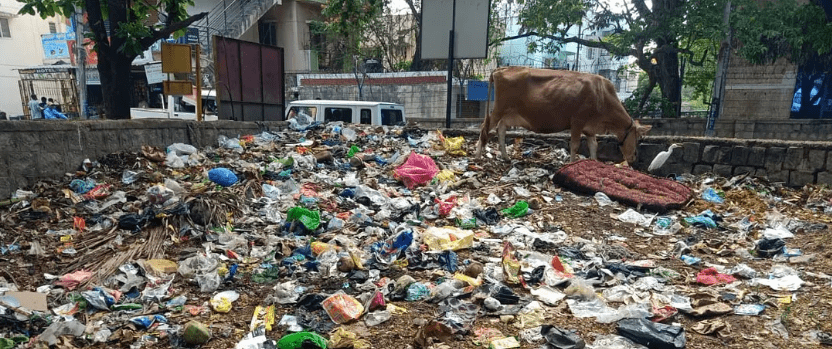
If you walk through any Indian city today, litter doesn’t shock you. Plastic cups, snack wrappers, bottles — they’ve blended into the background. We notice them, but not enough to stop. And that’s strange, considering who we are. Indians consider nature sacred—earth, water, fire, air, and space are revered; rivers are worshipped as mothers; trees are protected; and cleanliness has long been linked to godliness. Respect for the land is not a new idea to us; it is deeply embedded in our culture and beliefs. But this wasn’t how our surroundings always looked. Earlier, India was largely forests, farms, and open land. People used what the land gave them — clay pots, leaf plates, wood, paper, and cloth. When something was thrown away, it went back into the soil. The earth took it in. Waste existed, but it didn’t stay. It didn’t pile up in front of us, so no one had to think too hard about it.
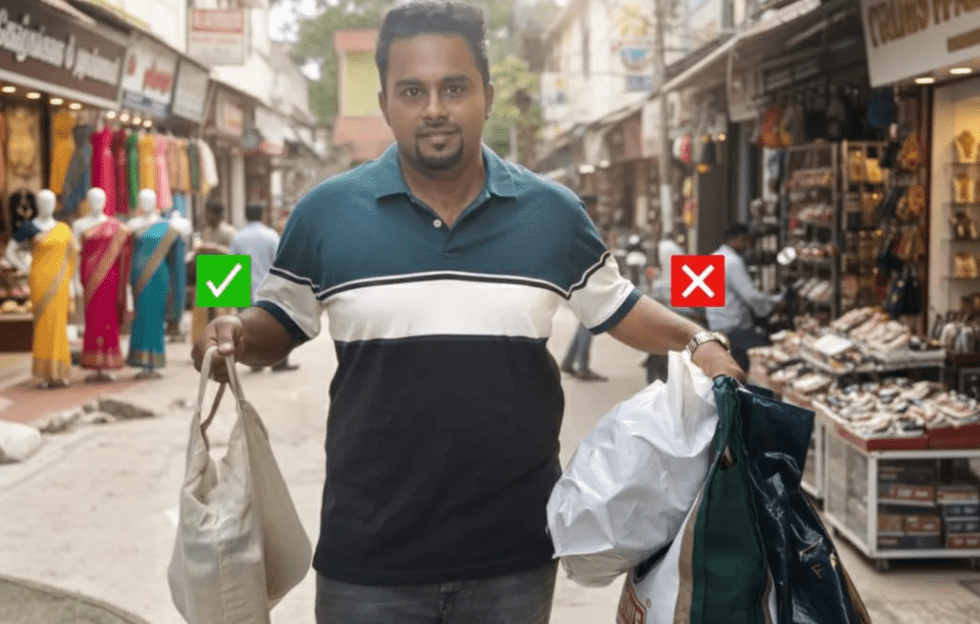
Then plastic and other non-biodegradable materials entered our lives. It made life more convenient — lighter, cheaper, disposable. And we carried our old habits straight into these newer materials. We kept throwing things away the same way we always had, except now nothing has disappeared and just sat there. And still, we haven’t changed our ways or even paused.
Part of this comes from how we’ve always thought about cleanliness. Homes are kept clean with great care, but public spaces feel like someone else’s problem. Streets, bus stops, parks — they don’t feel owned. Someone will come sweep it later. Someone always does.
Over time, throwing something on the road or out of a window became strangely normal. There’s almost no guilt attached to it. When litter is everywhere, one more wrapper doesn’t feel like a decision — it feels invisible.
When India became independent, it was struggling with hunger and poverty as the colonial powers had left it dry and poor. Gripped with famines and disease, waste was hardly a priority.
Our cities didn’t help either. They grew fast, far faster than waste systems could keep up. Bins are missing or overflowing. Segregation is confusing or absent. Even people who want to do the right thing often give up because the system doesn’t meet them halfway.
But there’s another gap we rarely talk about — education.
Most of us were never really taught about waste. Not in a practical way. In school, environmental studies meant definitions and exams. No one taught us where our waste goes, what happens when it doesn’t decompose, or how everyday habits quietly damage land and water. We learned about food chains, but not about waste chains. So responsibility never became muscle memory.
Other countries figured this out early. In Japan, people carry their trash home if they can’t find a bin. Not because they’re forced to, but because they were raised that way, as Japanese children are expected to clean up the common areas in school. In Singapore, strict rules were enforced against littering and over time, not littering became normal, not exceptional. South Korea curbed littering by making waste disposal costly and accountable. Across these countries, littering feels socially wrong — not just illegal — because systems, education, and consequences reinforce better habits.
India is deeply shaped by role models and influencers, yet hardly any media personalities are vocal about this issue. Our films and popular media often portray littering as normal — tossing waste from moving vehicles or discarding it casually without consequence. If mass cinema begins showing the opposite — pausing before throwing, carrying waste, using segregation bins — it can quietly reset what feels normal, because on screen, habits form as powerfully as laws do.
Even in developing countries, change has been possible: Rwanda began cleaning up after banning plastic bags in 2008, later extending the ban to other single-use plastics and institutionalising monthly community clean-ups, Bhutan reinforced its long-held environmental values through national waste and plastic controls starting in the early 2000s, Bangladesh banned thin plastic bags in 2002 after floods exposed the damage caused by clogged drains, and Nepal, Indonesia, and Vietnam made visible progress between 2010–2020 by combining local enforcement, community ownership, and everyday accountability.
In contrast, India’s ban on single-use plastic is still very recent (2022) and unevenly enforced, often lacking strong leadership-level belief in the cause. As a result, many towns and informal markets continue to rely on single-use plastics, with alternatives either unavailable or inconsistently implemented.
Overall, experiences from developing countries show that visible change happens when enforcement goes hand in hand with cultural engagement — when rules are backed by shared responsibility and social norms.
India doesn’t need to copy anyone exactly. But we can relearn something we once knew—how to revere the earth as our mother and live without treating the land as if it will endlessly absorb our mistakes. We need to develop a shared discomfort for littering.
Maybe change begins when we stop thinking, “It’s just one wrapper,” and start thinking, “This place is mine too.”

End-of-life disposal
Sanitary waste
Waste segregation
- by Anusha Mounika
Circular economy
Sustainable lifestyle
- by Anas Mohammed

Circular economy
Sustainable lifestyle
- by Mahek Singh, MEL Lead, Saahas