You’re too young to work in an NGO!
Sustainable lifestyle
- By Anusha Mounika, Project Manager, Saahas
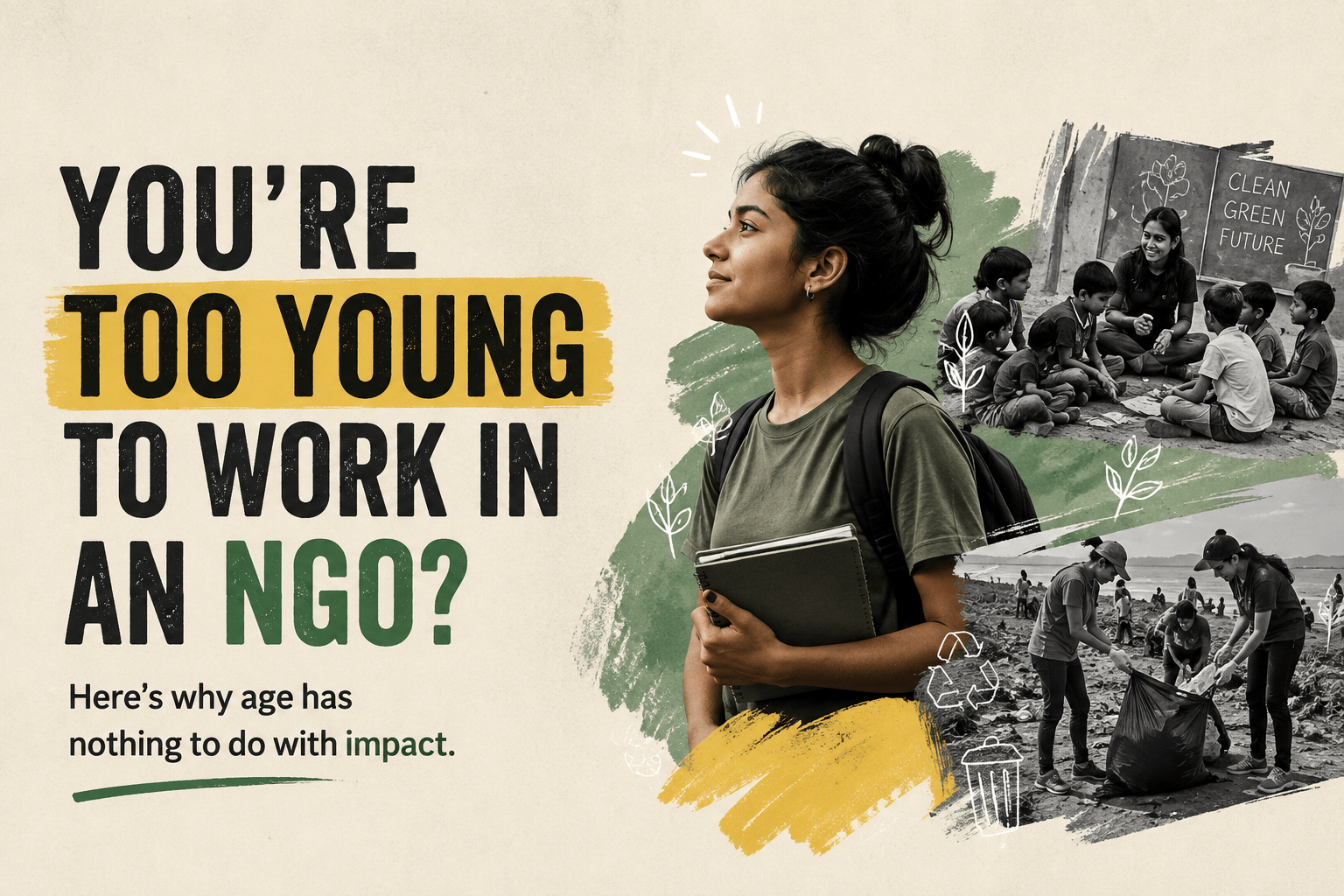
“You’re too young to work in an NGO.”
“Why are you working without a salary?”
“Are you an employee or a volunteer?”
These are some of the questions I often encounter when I introduce myself in personal and professional circles. They have become so familiar that I can now anticipate them before they are even asked.
A few years ago, I was building my career as an urban development professional. The path was familiar, respected, and easy for people to understand. Today, I work in the waste management sector through an NGO. The work is deeply connected to urban development, yet society’s reaction is remarkably different.
At first, I thought these questions were about my individual career choice. However, over time, I realised they reveal something much larger about how we, as a society, perceive work, success, and dignity.
For many of us, success has been defined within a narrow framework. We often associate it with high salaries, corporate titles, prestigious organisations, and visible markers of achievement. When someone chooses a different path, especially one that prioritises social impact over conventional recognition, it can create discomfort. People begin looking for an explanation because the decision does not fit the framework they are accustomed to.
The irony is that my current work addresses one of the most pressing challenges our country faces. Every day, India generates thousands of tonnes of waste. Effective waste management strengthens public health, environmental sustainability, climate resilience, livelihoods, and the overall quality of life for millions of people. Yet when the conversation turns to waste management, many people lose interest or associate the field with stigma. Perhaps this is because waste is something society would rather not see, discuss, or think about.
We want clean streets, healthy neighbourhoods, and efficient cities, yet we rarely pause to consider the systems and people that make these outcomes possible. This work often remains invisible until something goes wrong.
This attitude extends beyond waste management. It points to a broader challenge in how we view labour. Although we often speak about the dignity of work, we continue to create an invisible hierarchy of professions. Some occupations are celebrated, while others are merely tolerated. Some jobs command immediate respect, while others are expected to constantly justify their value.
What determines this hierarchy is rarely social value. More often, it is status.
A sanitation worker contributes directly to public health. A waste picker recovers valuable materials that would otherwise end up in landfills. A social-sector professional helps design systems that strengthen communities and protect the environment. Yet these contributions are often overlooked because they do not fit our conventional image of success.
The contradiction becomes even more striking when young people enter the social sector. Society applauds young entrepreneurs who take risks to build startups. It celebrates young professionals who leave stable jobs to pursue business ideas. Yet when a young person chooses to work on social or environmental challenges, the response is often scepticism rather than encouragement.
The question, “You’re too young to work in an NGO,” reveals a deeper assumption that social-sector work is something people do later in life, after they have built careers elsewhere, accumulated wealth, or reached retirement.
But why should solving society’s problems be treated as a retirement plan?
Climate change is not waiting. Urban challenges are not waiting. Waste management issues are not waiting. If these problems demand urgent solutions, then they also need young people willing to dedicate their energy, creativity, and expertise to addressing them.
My own journey into waste management has taught me that meaningful work is not always glamorous. It does not always come with recognition, and it certainly does not always come with societal approval. Yet there is a distinct sense of purpose in working on challenges that directly affect people’s lives and shape the future of our cities.
The more time I spend in this sector, the more I realise that waste management is not really about waste. It is about people, health, livelihoods, and environmental justice. It is about creating systems that allow communities to thrive.
Most importantly, it is about dignity.
Dignity for the sanitation worker whose contribution often goes unnoticed.
Dignity for the waste picker whose work supports the recycling economy.
Dignity for the young professional who chooses impact over prestige.
And dignity for every individual whose honest work contributes to society, regardless of how that work is perceived.
Perhaps the next time we meet someone working in waste management, sanitation, development, or any profession that falls outside our traditional definition of success, we should pause before asking, “Why are you doing this?”
Instead, we should ask, “What problem are you trying to solve?”
Because the true measure of a profession should not be how prestigious it appears from the outside. It should be the value it creates for society.
In addition to better waste management systems, India also needs a society that appreciates the people who build and sustain them. The day we genuinely embrace the dignity of work is the day we begin to respect not only the work we admire but also the work we depend on every single day.
Circular economy
Sustainable lifestyle
- by Suvarna Mishra, Knowledge Development Associate, Saahas
Circular economy
Resource recovery
Sustainable lifestyle
Waste segregation
- By Divya Tiwari, Advisor, Saahas

Policy
Resource recovery
Waste segregation
- By Anas Mohammed R, Project Manager, Saahas