The Leeches, the Complaints, and a Lesson in Resilience
Sustainable lifestyle
- By Vindhya Shree MP, Project Manager, Saahas
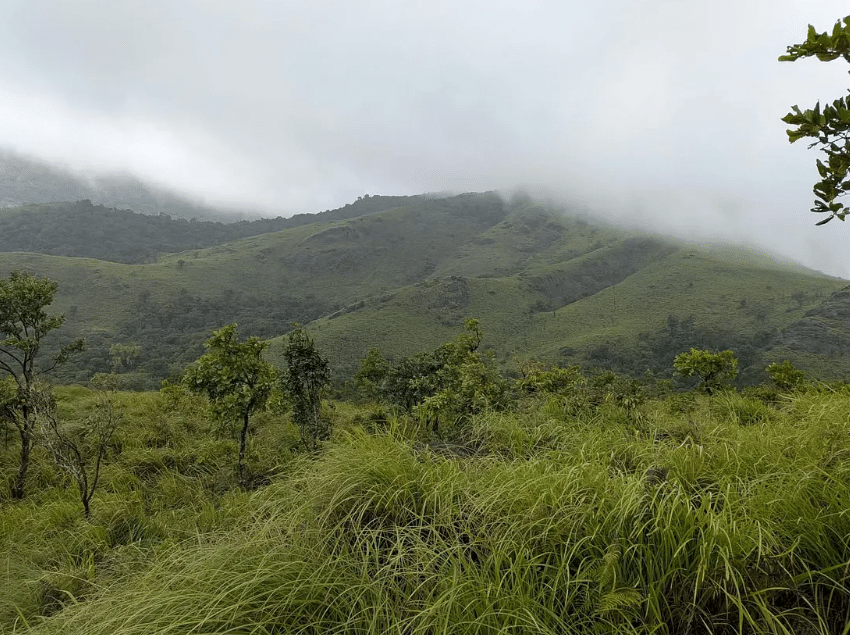
Sometimes, experiences in our personal lives offer insights that shape how we approach our professional lives. A recent trek with a family in the Mangalassery Hills of Wayanad gave me one such moment of reflection. Surrounded by lush green landscapes, mountains, flowing streams, and the quiet of nature, I found the journey unforgettable, except for one thing.
Throughout the trek, my fellow trekkers complained about how difficult the trail was and how exhausted they felt. Leeches added to their anxiety. Every few minutes, someone would spot one, panic, and warn the rest of us that another might be nearby. At one point, they even tried to frighten me.
I could have joined them. I could have worried about every step, constantly checking my shoes and legs, and allowing their fear to become my own. Instead, I chose to look around. The mountains, trees, mist, and sound of flowing water told a completely different story. The leeches were real, but they did not have to define the trek. I chose to focus on the experience rather than the distraction. Somewhere along the trail, I began thinking about my work in solid waste management at Saahas, a field with far-reaching impact.
When complaints become the problem
In my work, I interact with stakeholders responsible for or involved in solid waste management in their communities. Often, these conversations begin with what they lack.
“We don’t have enough people.”
“We don’t have enough resources.”
“We don’t have the infrastructure.”
“People don’t cooperate.”
“The system doesn’t support us.”
“The situation here is different.”
Of course, many of these challenges are real. Solid waste management is complex, and systemic gaps cannot simply be wished away. But there is a difference between acknowledging a challenge and allowing it to determine what happens next. Initially, I found myself nodding along, agreeing with the complaints and sometimes even reinforcing them. Without realising it, I was being pulled into the same problem-focused mindset. Instead of asking, “What can we do with what we have?” I was joining the conversation about why nothing could be done without more. Like the leeches on the trail, the complaints had become a distraction.
The need for a shift in perspective
The trek reminded me that the same situation can look entirely different depending on where we direct our attention. The leeches were real, and the trail was difficult and tiring. But the beauty surrounding us was just as real. Looking beyond the immediate obstacles allowed me to take in the bigger picture and recognise the parallel between the trail and my work.
The same is true at work. The challenges in solid waste management, including limited resources and infrastructure, low awareness, behavioural barriers, and institutional constraints, are real. But so are the opportunities. A commitment to serving the community and protecting the environment can help us find a way through these roadblocks. There are always small improvements we can make, people willing to learn, communities ready to embrace change, and systems that can improve one step at a time. Progress often begins when someone stops repeating “we can’t” and starts asking, “What can we do?”
Do not let the noise decide your direction
One thing the trek taught me is that fear and complaints can be contagious. When one person begins to worry or calls the trail impossible, others start seeing it the same way. Something similar happens in organisations and communities: constant complaining can gradually create a culture of inaction. Our role, especially when working with communities and stakeholders, is not always to agree with every complaint. Sometimes, it is to acknowledge the challenge and gently redirect the conversation towards possibilities. Solid waste management requires us to look beyond what is immediately visible and understand how poor waste practices can affect an entire community. It also involves many stakeholders, including waste generators, collectors, processors, sanitation staff, local authorities, and the government, so constraints and disagreements are inevitable. These situations call for resilience and the courage to ask better questions.
“Yes, this is difficult. But what can we do?”
“Yes, resources are limited. What can we start with?”
“Yes, there are gaps. What is one gap we can address today?”
That shift may sound small, but it can change the entire direction of a conversation.
Become the example for others to follow
The biggest lesson I took from the trek is that determination does not mean pretending problems do not exist. It means refusing to let them control the entire experience. Sustainability leadership requires the same mindset. If we want stakeholders to act and communities to take ownership, we cannot simply add another voice to the list of problems. We must demonstrate what is possible, even within constraints. Solid waste management depends on ownership and shared responsibility. Awareness matters, but lasting change becomes more achievable when people see members of their own communities leading by example. This can encourage behavioural change and help create low-waste communities. Sometimes, the best way to influence someone who says, “This won’t work,” is to show them that it can. Take one step. Try one solution. Improve one process. Inspire one person. Then let that example encourage others.
I came back from the trek carrying a lesson that felt surprisingly relevant to my work: challenges deserve attention, but they shouldn’t dictate our direction. There will always be leeches on the trail. There will always be reasons to complain. But if we are determined about where we want to go, we don’t have to let them decide our journey. Sometimes, the most powerful thing we can do is keep walking and, in the process, show others that they can walk too.
Circular economy
Sustainable lifestyle
- by Suvarna Mishra, Knowledge Development Associate, Saahas
Circular economy
Resource recovery
Sustainable lifestyle
Waste segregation
- By Divya Tiwari, Advisor, Saahas
Policy
Resource recovery
Waste segregation
- By Anas Mohammed R, Project Manager, Saahas